The Landed-Cost Rollercoaster: What Fabric Buyers Should Model Before the Next PO
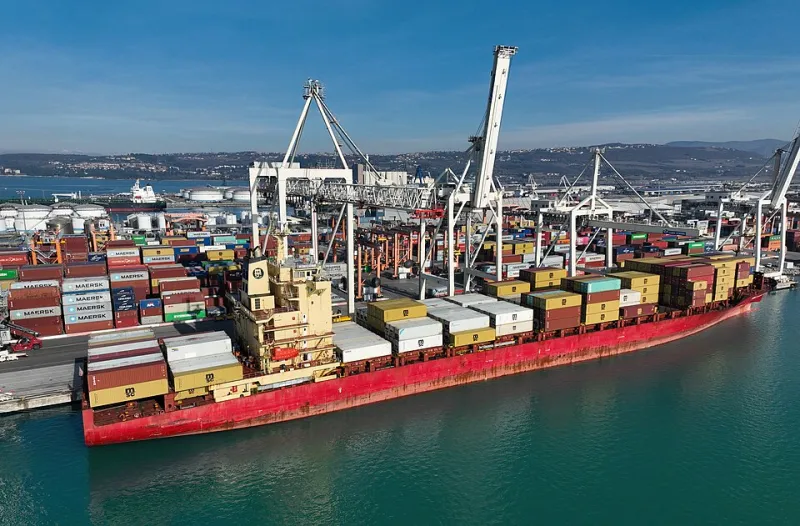
Photo: Petar Milošević, CC BY-SA 4.0, via Wikimedia Commons
A quoted price per yard is not a landed cost. For US fashion brands buying wholesale fabric, the true cost of a roll includes ocean freight, origin and destination charges, customs duties, brokerage, inland transport, insurance, and the less visible cost of documentation errors. In a freight environment that remains volatile in 2026, treating the quote as the cost is a margin risk.
The components beyond the quoted yard price
Landed cost begins with the supplier's price, often quoted FOB origin port. From there, the buyer must account for origin charges, ocean freight, destination terminal handling, customs brokerage, duties, merchandise processing fees, harbor maintenance fees where applicable, drayage, rail or truck transport to the warehouse, and insurance. For less-than-container-load shipments, freight is often charged by volume or weight, which can make small orders disproportionately expensive.
Each component can move independently. Ocean rates may be contracted or spot. Peak-season surcharges can appear after the purchase order is issued. Inland rail schedules can extend transit. A demurrage or detention charge can erase the benefit of a low freight quote. The landed-cost model should show these line items separately so the brand can see which assumptions are driving the total.
Why 2026 freight remains a moving target
Carrier capacity decisions, blank sailings, routing disruptions, and port congestion can change both transit times and rates within a single development cycle. A brand that models freight as a fixed percentage of fabric cost will misread its exposure when rates spike or when a shipment is split across multiple containers.
Contract rates can provide stability, but they are not universal. Spot rates can be attractive in soft markets and painful in tight ones. The practical response is not to predict the market but to model scenarios: a base case, a high-freight case, and a delayed-transit case. The model should show the landed cost per yard and, where fabric yield is known, the landed cost per finished unit.
Tariff classification is not a footnote
US customs duty depends on the Harmonized Tariff Schedule classification of the fabric. Classification can turn on fiber content, construction, weight, finish, and whether the fabric is knitted or woven. A blend can be classified differently from either of its component fibers. A misclassified entry can lead to delayed release, additional duty, and penalties.
Brands should ask suppliers for the HTS code and the rationale behind it. The commercial invoice description should align with that classification. Where trade actions or tariff programs apply, the treatment should be verified at the time of entry rather than assumed from an earlier shipment. The supplier's confidence in a code is not a substitute for the importer's reasonable care obligation.
A practical landed-cost model
Build the model by style and color, not by a single blended average. Start with quantity, unit price, and packed dimensions. Allocate freight by volume or weight, then add duty, fees, brokerage, and inland transport. Include a contingency line for demurrage, detention, or re-routing. Update the model when the supplier confirms packed roll dimensions, because freight allocation is only as good as the shipping data behind it.
The model should also show cash-flow timing. Duties and freight are paid before the fabric generates revenue. A landed-cost model that ignores payment timing can make a program look healthier than it is. For reorder programs, run the model again with current rates rather than carrying forward the original assumptions.
Documentation discipline
Customs release depends on clean documents: commercial invoice, packing list, certificate of origin where applicable, and accurate fiber content and construction details. The supplier should provide consistent descriptions across documents. Discrepancies between the invoice and the entry can trigger holds that cost more than the duty itself.
Questions before the purchase order
Before committing, ask which HTS code will be used and on what basis; what the packed roll dimensions and weights are; whether the supplier can provide a freight forwarder quote; what the typical routing and transit time is; who handles importer security filing and customs bond; what origin charges apply; whether the supplier can provide a landed-cost estimate; what documents accompany the shipment; how demurrage and detention are handled; and what the policy is if tariff treatment changes after the order is placed.
Landed cost is a management tool, not a one-time calculation. Brands that model it before the purchase order and update it as rates and rules change are better positioned to protect margin in a volatile freight year.